
Electric Fields Apparatus IEC Manufacturer,Supplier and Exporter in India
.jpg)
Product Code : SCL-PLE-11863
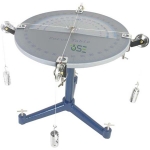
The Electric Fields Apparatus IEC by Scientifc Equipment is an educational physics laboratory apparatus designed to demonstrate electric fields, electrostatic force, field lines, equipotential patterns, charge distribution, and the behaviour of electric fields around different electrode shapes. It is suitable for school physics laboratories, college science labs, electrostatics practicals, STEM classrooms, teacher demonstrations, and supervised student experiments.
This apparatus helps students visualize and investigate the normally invisible effect of electric fields. It supports practical learning of electric potential, field direction, conductor shapes, point charges, parallel plates, field mapping, voltage difference, and electrostatic interaction in a controlled educational setup.
Product Description
Electric fields are regions around charged objects where electric force can act on another charge. The Electric Fields Apparatus IEC is commonly used to demonstrate field patterns between different electrode arrangements such as point-to-point, point-to-plate, parallel plate, circular electrode, or other IEC-style configurations depending on the supplied model.
The Scientifc Equipment Electric Fields Apparatus IEC may include an experiment tray, electrodes, conducting paper or conductive medium, probes, connecting terminals, leads, graph sheet, low-voltage power connections, and demonstration accessories depending on product configuration. It is designed for supervised educational and laboratory demonstration use only.
Key Features
- Educational apparatus for studying electric fields and potential patterns.
- Useful for demonstrating field lines, equipotential regions, and electrode effects.
- Supports electrostatics lessons using different electrode arrangements.
- Helps students understand electric field direction and charge interaction.
- Can be used for field mapping activities depending on product configuration.
- Suitable for physics labs, STEM learning, and teacher-led practicals.
- Encourages observation, measurement, plotting, comparison, and scientific reasoning.
- Compatible with suitable low-voltage power supplies and meters depending on setup.
- Designed for supervised educational laboratory use only.
Product Specifications
|
Product Name |
Electric Fields Apparatus IEC |
|
Brand |
Scientifc Equipment |
|
Product Type |
Educational Electric Field and Electrostatics Demonstration Apparatus |
|
Application |
Electric Field Demonstration, Equipotential Mapping, Electrode Pattern Study, Electrostatics Practical, Voltage Field Activity, STEM Learning, and Classroom Teaching |
|
Working Principle |
Electric Field Patterns Are Produced Around Charged or Energized Electrodes, Allowing Students to Observe or Map Field Direction and Potential Distribution |
|
Possible Components |
Experiment Tray, IEC-Style Electrodes, Conductive Paper or Medium, Probe, Connecting Leads, Input Terminals, Graph Sheet, Electrode Holders, Base, and Demonstration Accessories Depending on Product Configuration |
|
Possible Material |
Plastic or Acrylic Tray, Metal Electrodes, Conductive Paper, Carbon Paper, Insulated Terminals, Copper or Brass Contacts, Plastic Base, and Educational-Grade Laboratory Materials Depending on Model Design |
|
Power Requirement |
Suitable Low-Voltage DC Power Supply Depending on Experiment Type and Product Configuration |
|
Measurement Type |
Field Pattern Observation, Potential Difference Measurement, Equipotential Plotting, Electrode Comparison, and Field Line Mapping Depending on Setup |
|
Compatible Accessories |
Low-Voltage DC Power Supply, Voltmeter, Multimeter, Connecting Leads, Conductive Paper, Graph Paper, Compass Probe, Activity Sheet, and Electrostatics Lab Accessories |
|
Educational Use |
Physics Lesson, Electrostatics Practical, Electric Field Mapping Activity, Potential Difference Demonstration, STEM Project, and Student Laboratory Work |
|
Suitable For |
Schools, Colleges, Physics Laboratories, Science Rooms, STEM Labs, Teacher Training Centers, and Educational Institutions |
|
Learning Topics |
Electric Field, Field Lines, Electric Potential, Equipotential Lines, Voltage, Electrodes, Charge Distribution, Conductors, Insulators, and Electrostatic Force |
|
Operation |
Low-Voltage Connection, Electrode Placement, Probe Measurement, Field Mapping, Pattern Plotting, Observation Recording, and Supervised Laboratory Demonstration |
|
Important Note |
For Educational and Laboratory Demonstration Use Only; IEC Design, Electrode Shapes, Tray Size, Conductive Medium, Power Requirement, Accessories, and Construction Depend on Product Configuration |
How to Use
- Place the Electric Fields Apparatus IEC on a stable, clean, dry, and level laboratory bench.
- Inspect the tray, electrodes, probes, terminals, conductive paper or medium, and connecting leads before use.
- Set up the selected electrode arrangement according to the supplied guide or teacher’s experiment plan.
- Connect the electrodes to a suitable low-voltage DC power supply while the power supply is switched off.
- If using conductive paper or a conductive medium, prepare it as directed by the experiment instructions.
- Switch on the power supply at the recommended low-voltage setting.
- Use a probe and voltmeter or multimeter to locate points of equal potential if field mapping is required.
- Mark readings on graph paper or activity sheets to create equipotential lines.
- Draw electric field lines perpendicular to equipotential lines where applicable.
- Repeat the activity using different electrode shapes to compare field patterns.
- Switch off the power supply before changing electrodes or connections.
- After use, disconnect the circuit, dry and clean the apparatus if required, and store all components safely.
Safety and Handling Instructions
- Use only under teacher, laboratory instructor, or trained adult supervision.
- Use only the recommended low-voltage educational power source.
- Do not connect the apparatus directly to mains electricity.
- Switch off the power supply before changing connections, electrodes, or conductive sheets.
- Do not touch exposed terminals while the circuit is energized.
- Keep the apparatus away from water, chemicals, flames, heat, and damp surfaces unless the model specifically uses a safe conductive liquid medium.
- If a liquid conducting medium is used, avoid spills and keep liquids away from power supplies and electrical outlets.
- Use insulated connecting leads and check all connections before switching on power.
- Do not use damaged wires, cracked trays, loose terminals, corroded electrodes, or faulty meters.
- Clean and dry all components after use according to laboratory procedure.
- Store in a clean, dry, and protective place after use.
Educational Applications
- Demonstrating electric field patterns between electrodes.
- Mapping equipotential lines using a probe and meter.
- Teaching electric potential and field direction.
- Comparing field patterns from different electrode shapes.
- Explaining the relationship between voltage difference and electric field.
- Supporting electrostatics, electricity, and STEM practicals.
- Useful for classroom demonstrations, student investigations, and practical exams.
- Encouraging measurement, plotting, comparison, calculation, and scientific reasoning.
Why Choose Scientifc Equipment Electric Fields Apparatus IEC?
The Scientifc Equipment Electric Fields Apparatus IEC provides a practical and visual method for teaching electric fields and equipotential patterns. By allowing students to investigate different electrode arrangements, the apparatus makes electrostatics concepts easier to understand through supervised hands-on laboratory work.
FAQ
- What is the Electric Fields Apparatus IEC used for?
It is used to demonstrate electric fields, field lines, equipotential patterns, voltage distribution, electrode effects, and electrostatic concepts in physics lessons.
- Is this apparatus suitable for school physics laboratories?
Yes, it is suitable for school physics labs, college science labs, STEM classrooms, electrostatics practicals, and supervised teacher-led demonstrations.
- What principle does this apparatus demonstrate?
It demonstrates that electric fields exist around charged or energized electrodes and that electric potential varies across the field region.
- Can students map equipotential lines with this apparatus?
Yes, depending on the product configuration, students can use a probe and voltmeter or multimeter to identify points of equal potential and plot equipotential lines.
- What accessories may be required?
Useful accessories may include a low-voltage DC power supply, voltmeter, multimeter, connecting leads, conductive paper, graph paper, probe, and activity sheet.
- Can different electrode shapes be tested?
Yes, many electric field apparatus designs allow comparison of different electrode shapes such as plates, points, circular electrodes, or other IEC-style arrangements depending on the supplied components.
- Can students operate the apparatus independently?
Students should use the apparatus only under teacher or laboratory instructor supervision, especially when connecting power supplies, meters, and electrodes.
- How should the Electric Fields Apparatus IEC be stored?
Clean and dry the apparatus after use, organize electrodes and leads, and store the complete set in a clean, dry, and protective place away from moisture, chemicals, heat, dust, and rough handling.
SEO Keywords
Electric Fields Apparatus IEC, Scientifc Equipment Electric Fields Apparatus, electric field apparatus, equipotential mapping kit, school physics electric field kit, electrostatics apparatus, electric field line demonstration, voltage field mapping apparatus, STEM electrostatics kit, physics lab electric field apparatus, electrode field demonstration, educational electric fields apparatus.
SEO Meta Title
Electric Fields Apparatus IEC – Scientifc Equipment
SEO Meta Description
Buy Electric Fields Apparatus IEC by Scientifc Equipment for school physics labs, electrostatics demonstrations, equipotential mapping, electric field line experiments, STEM practicals, and supervised classroom learning.
Google E-E-A-T Focused Content
This product content is prepared to support teachers, school buyers, laboratory suppliers, physics educators, STEM coordinators, science instructors, lab technicians, students, and educational institutions with clear product information, practical specifications, usage guidance, safety instructions, and helpful FAQs. The content focuses on accurate educational electrostatics applications, supervised electric field demonstrations, safe low-voltage field mapping activities, electrode pattern observation, equipotential plotting, and trustworthy product guidance while clearly stating that the product is for educational and laboratory demonstration use only.
 (1).png)
.png)

.jpg)

.jpg)
.jpg)