
Electric Field Detector Manufacturer,Supplier and Exporter in India
.jpg)
Product Code : SCL-PLE-11862
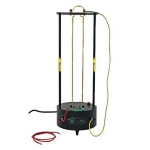
The Electric Field Detector by Scientifc Equipment is an educational physics laboratory apparatus designed to detect and demonstrate the presence of electric fields, static charge, electrostatic induction, charge distribution, and field strength comparison. It is suitable for school physics laboratories, college science labs, electrostatics practicals, STEM classrooms, teacher demonstrations, and supervised student experiments.
This detector helps students understand how electric fields exist around charged objects even without direct contact. It supports practical learning of positive and negative charge effects, field detection, electrostatic force, charged rods, Van de Graaff generator demonstrations, induction, and basic electric field concepts.
Product Description
An electric field detector is used to sense or indicate the presence of an electric field near charged objects. Depending on the model design, the detector may use an indicator LED, meter movement, electronic circuit, probe, antenna, or charge-sensitive element to show the effect of nearby electrostatic charge.
The Scientifc Equipment Electric Field Detector may include a detector body, sensing probe, indicator LED, battery compartment, switch, sensitivity control, insulated handle, connecting terminals, and demonstration accessories depending on product configuration. It is designed for supervised educational and laboratory demonstration use only.
Key Features
- Educational apparatus for detecting electric fields and static charge.
- Useful for teaching electrostatics, charge distribution, and electric field concepts.
- Helps students observe field effects without direct contact with charged objects.
- Can be used with charged rods, rubbed materials, electroscopes, or electrostatic generators depending on setup.
- May include visual, electronic, or meter-based indication depending on product configuration.
- Suitable for physics, electricity, magnetism, and STEM demonstrations.
- Encourages observation, prediction, comparison, and scientific reasoning.
- Compact and easy to use in supervised classroom experiments.
- Designed for supervised educational laboratory use only.
Product Specifications
|
Product Name |
Electric Field Detector |
|
Brand |
Scientifc Equipment |
|
Product Type |
Educational Electric Field and Electrostatic Charge Detection Apparatus |
|
Application |
Electric Field Detection, Static Charge Demonstration, Electrostatic Induction Study, Charge Distribution Activity, STEM Learning, and Classroom Teaching |
|
Working Principle |
The Detector Responds to the Presence of an Electric Field or Static Charge Near the Sensing Area, Producing a Visual, Electronic, or Meter-Based Indication Depending on Model Design |
|
Possible Components |
Detector Body, Sensing Probe, Indicator LED, Meter or Electronic Indicator, Switch, Sensitivity Control, Battery Compartment, Insulated Handle, Terminals, and Demonstration Accessories Depending on Product Configuration |
|
Possible Material |
Plastic or Metal Housing, Electronic Circuit Board, Sensor Probe, LED Indicator, Insulated Wiring, Battery Contacts, and Educational-Grade Laboratory Materials Depending on Model Design |
|
Power Requirement |
Battery Operated or Low-Voltage Power Source Depending on Product Configuration |
|
Detection Type |
Static Electric Field, Charged Object Field, Electrostatic Induction Effect, or Field Strength Comparison Depending on Model Configuration |
|
Compatible Accessories |
Charged Rods, Fur Pad, Silk Cloth, Electroscope, Van de Graaff Generator, Electrostatics Kit, Insulated Stand, Activity Sheet, and Physics Lab Accessories |
|
Educational Use |
Physics Lesson, Electrostatics Practical, Charge Detection Demonstration, Electric Field Activity, STEM Project, and Student Observation Work |
|
Suitable For |
Schools, Colleges, Physics Laboratories, Science Rooms, STEM Labs, Teacher Training Centers, and Educational Institutions |
|
Learning Topics |
Electric Field, Static Electricity, Charge, Electrostatic Induction, Field Strength, Conductors, Insulators, Charged Rods, and Electrostatic Force |
|
Operation |
Manual Field Sensing, Static Charge Detection, Indicator Observation, Distance Comparison, Field Mapping Activity, Data Recording, and Supervised Laboratory Demonstration |
|
Important Note |
For Educational and Laboratory Demonstration Use Only; Sensitivity, Indicator Type, Power Source, Probe Design, Size, Accessories, and Construction Depend on Product Configuration |
How to Use
- Place the Electric Field Detector and demonstration materials on a clean, dry, and stable laboratory bench.
- Inspect the detector, sensing probe, switch, battery compartment, indicator, and accessories before use.
- Insert the recommended battery or connect the suitable low-voltage source if required by the model.
- Switch on the detector and check the indicator response according to the product instructions.
- Charge a suitable demonstration object such as an acrylic rod or PVC rod using an approved rubbing material.
- Bring the charged object slowly near the detector probe without touching it, unless the instructions allow contact testing.
- Observe the indicator change, LED response, meter movement, or signal variation.
- Move the charged object closer and farther away to compare field strength effects.
- Test different materials or charged objects and record the detector response.
- Discuss how the electric field exists around charged objects and affects the detector.
- Switch off the detector after use, remove batteries if storing for a long time, and keep all accessories safely organized.
Safety and Handling Instructions
- Use only under teacher, laboratory instructor, or trained adult supervision.
- Use only for educational electrostatic and low-voltage demonstrations.
- Do not connect the detector directly to mains electricity or high-voltage power lines.
- Do not use the detector as a safety tester for live electrical wiring.
- Keep the detector away from water, chemicals, flames, heat, and damp surfaces.
- Do not touch exposed electrical parts or damaged terminals if the unit is broken.
- Use caution around Van de Graaff generators or other electrostatic generators; follow the equipment safety instructions.
- Keep electrostatic equipment away from pacemakers, medical electronic devices, sensitive electronics, magnetic cards, and computer storage devices.
- Do not use damaged wires, cracked housing, leaking batteries, loose probes, or faulty switches.
- Remove batteries before long-term storage if applicable.
- Store in a clean, dry, and protective place after use.
Educational Applications
- Detecting electric fields around charged objects.
- Demonstrating static electricity and electrostatic charge effects.
- Teaching electrostatic induction and field strength comparison.
- Comparing charged and uncharged objects.
- Mapping field response at different distances from a charged object.
- Supporting Van de Graaff generator and electroscope demonstrations.
- Useful for physics practicals, STEM activities, and classroom demonstrations.
- Encouraging observation, prediction, recording, comparison, and scientific reasoning.
Why Choose Scientifc Equipment Electric Field Detector?
The Scientifc Equipment Electric Field Detector provides a practical and visual way to teach electrostatics and electric field concepts. By helping students detect field effects around charged objects, it makes invisible electric fields easier to understand through supervised classroom and laboratory demonstrations.
FAQ
- What is an Electric Field Detector used for?
It is used to detect and demonstrate the presence of electric fields or static charge around charged objects in physics experiments.
- Is this detector suitable for school physics laboratories?
Yes, it is suitable for school physics labs, college science labs, STEM classrooms, electrostatics practicals, and supervised teacher demonstrations.
- What principle does the detector demonstrate?
It demonstrates that charged objects create electric fields around them, and these fields can be detected without direct contact depending on the detector design.
- Can it detect static electricity?
Yes, the detector can be used to demonstrate static charge effects from rubbed rods, charged materials, electroscopes, or electrostatic generators depending on model sensitivity.
- Does the detector require batteries?
Many electric field detectors are battery operated, while some may use a low-voltage power source. Exact power requirements depend on product configuration.
- Can it be used to test live mains wires?
No. This product is for educational electrostatic demonstrations only and should not be used as a safety tester for live electrical wiring or mains electricity.
- Can students use the detector independently?
Students should use the detector under teacher or laboratory instructor supervision, especially when working with charged rods, electrostatic generators, or other electrical demonstration equipment.
- How should the Electric Field Detector be stored?
Store the detector in a clean, dry, and protective place away from moisture, heat, chemicals, impact, and sensitive electronics. Remove batteries before long-term storage if applicable.
SEO Keywords
Electric Field Detector, Scientifc Equipment Electric Field Detector, electrostatic field detector, static electricity detector, electric field demonstration apparatus, school physics electrostatics kit, charge detection apparatus, STEM electric field activity, physics lab field detector, electrostatic induction demonstration, Van de Graaff field detector, educational electric field sensor.
SEO Meta Title
Electric Field Detector – Scientifc Equipment
SEO Meta Description
Buy Electric Field Detector by Scientifc Equipment for school physics labs, electrostatics demonstrations, static charge detection, electric field activities, STEM practicals, and supervised classroom learning.
Google E-E-A-T Focused Content
This product content is prepared to support teachers, school buyers, laboratory suppliers, physics educators, STEM coordinators, science instructors, lab technicians, students, and educational institutions with clear product information, practical specifications, usage guidance, safety instructions, and helpful FAQs. The content focuses on accurate educational electrostatics applications, supervised electric field detection demonstrations, safe low-voltage and static electricity handling, charge observation, field strength comparison, and trustworthy product guidance while clearly stating that the product is for educational and laboratory demonstration use only.


.jpg)
.jpg)
.jpg)
.jpg)
 (1).png)